When the Spirit of Porsche Motorsport Meets Modern Engineering
A one-off 1974 Porsche 911S RSR Turbo Evocation pairs up to 620 hp with a 1,050 kg chassis, specialist engineering and German road registration.
A one-off 1974 Porsche 911S RSR Turbo Evocation pairs up to 620 hp with a 1,050 kg chassis, specialist engineering and German road registration.
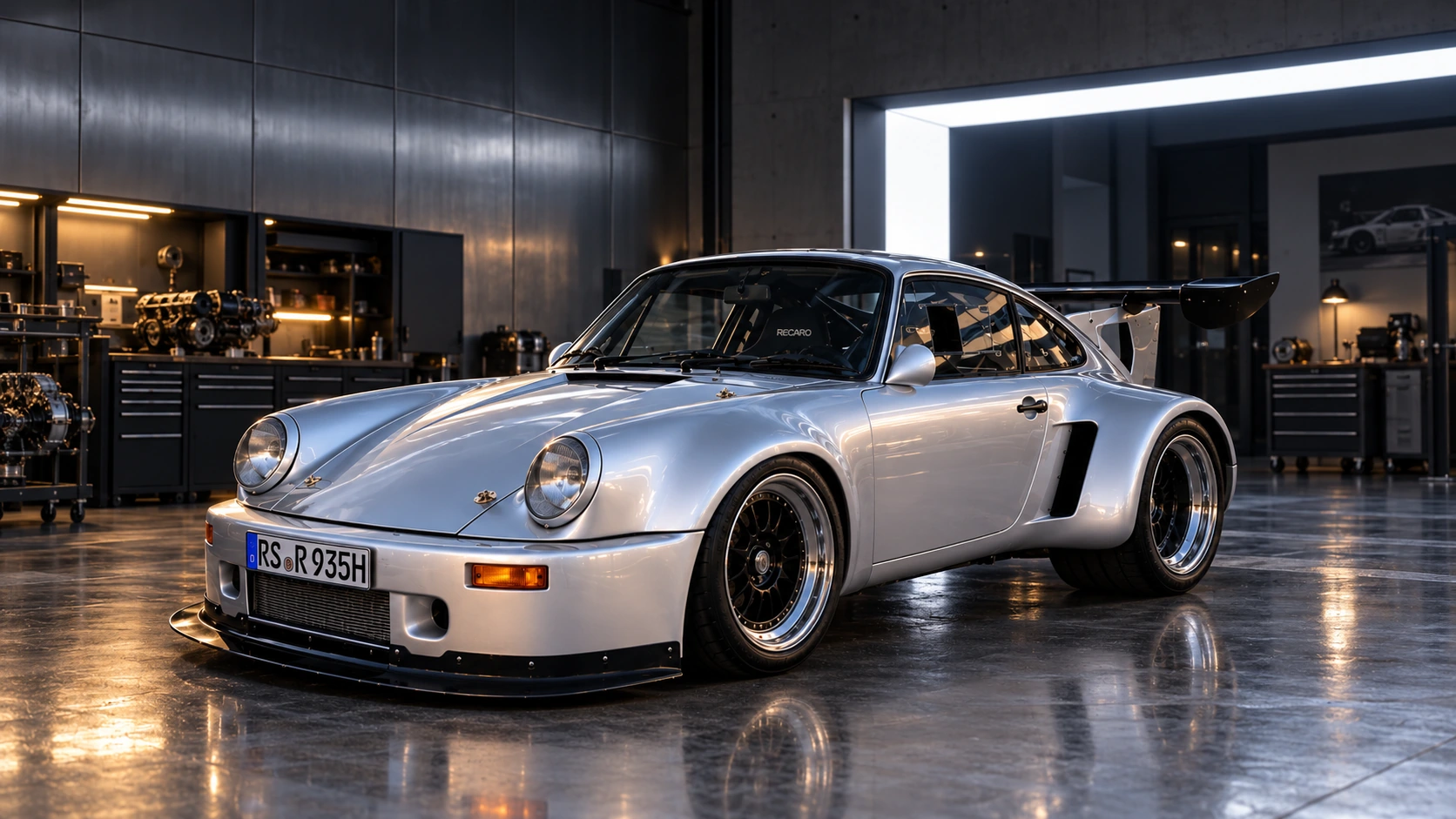
Few competition Porsches are as visually dramatic, or as historically significant, as the 1974 Carrera RSR Turbo. Developed during the formative years of Porsche’s turbocharged racing programme, the original factory racer helped establish an engineering philosophy that would ultimately lead to the 934, 935 and generations of turbocharged Porsche competition cars.
More than four decades later, one private owner set out to capture that same spirit in a very different way.
The result is this 1974 Porsche 911S RSR Turbo Evocation, a one-off automobile conceived not as a replica but as a modern interpretation of Porsche’s legendary turbocharged competition era. Built on a rust-free, accident-free 1974 911S chassis, the objective was ambitious: to combine classic RSR Turbo presence, extremely low weight and serious motorsport engineering with the ability to drive the car on public roads.
The project began in 2016 and brought together specialists from Germany and Great Britain.
Development involved Peter Prosten of Prosten Motorsport and renowned Porsche race engineer Neil Bainbridge, with body engineering and fabrication carried out in collaboration with DP Motorsport in Germany.
DP Motorsport extensively re-engineered the original body shell, widening the chassis to RSR specifications and incorporating lightweight fibreglass components and a bespoke engine cover. An FIA-approved welded roll cage was integrated into the structure, while BBS, Bilstein, Eibach and Michelin components contributed to a chassis designed to function as much more than a visual interpretation of a race car.
The philosophy was straightforward: maximizing performance while minimizing weight.
The finished Porsche weighs approximately 1,050 kilograms, just 2,315 pounds.
The mechanical specification is where this car decisively moves beyond the traditional Porsche “tribute” or evocation.
At its heart is a highly developed 3.3-liter turbocharged air-cooled flat-six engine controlled by programmable MoTeC engine management. Three selectable engine maps deliver approximately 540, 580 or 620 horsepower.
Power is transmitted through a reinforced four-speed manual transmission with a custom clutch assembly, titanium drivetrain components and numerous bespoke engineering solutions.
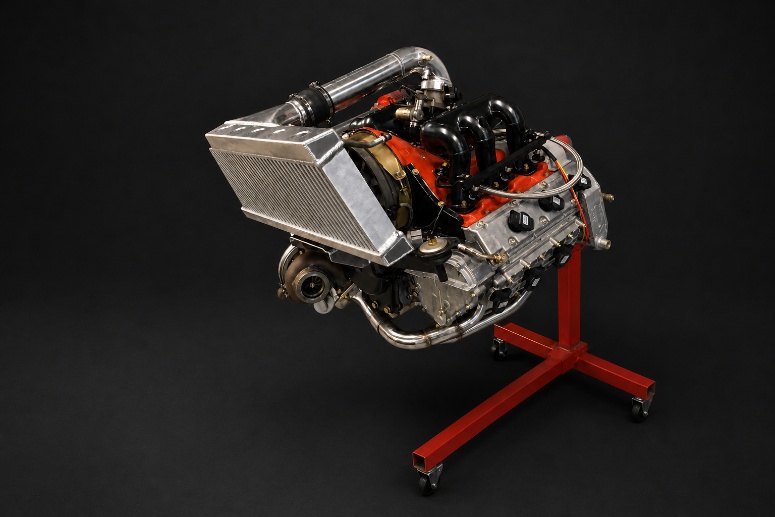
The engine and transmission were developed and dynamometer-tested before installation, and a specially engineered air-charge intercooler system was developed to improve cooling and performance. Final calibration was completed with the involvement of a senior MoTeC engineer, with particular attention to power delivery, drivability and reliability.
Consider those numbers for a moment: as much as 620 horsepower in a 2,315-pound, air-cooled 911.
That combination puts this Porsche’s character into perspective.
Perhaps the most intriguing part of the project is that the car was never intended to become a static showpiece.
The chassis features Bilstein coil-over suspension with Eibach components, Porsche 930 Turbo/935 RSR-inspired brakes, wide BBS wheels and Michelin Pilot Sport Cup 2 tyres. The integrated safety cage, competition seating, lightweight construction and motorsport fuel system further reinforce its intended purpose.
Yet unlike many competition-inspired builds, it was engineered from the outset for both road and track use.
After an individual TÜV inspection and certification, the Porsche received German road registration, including historic “H” registration.
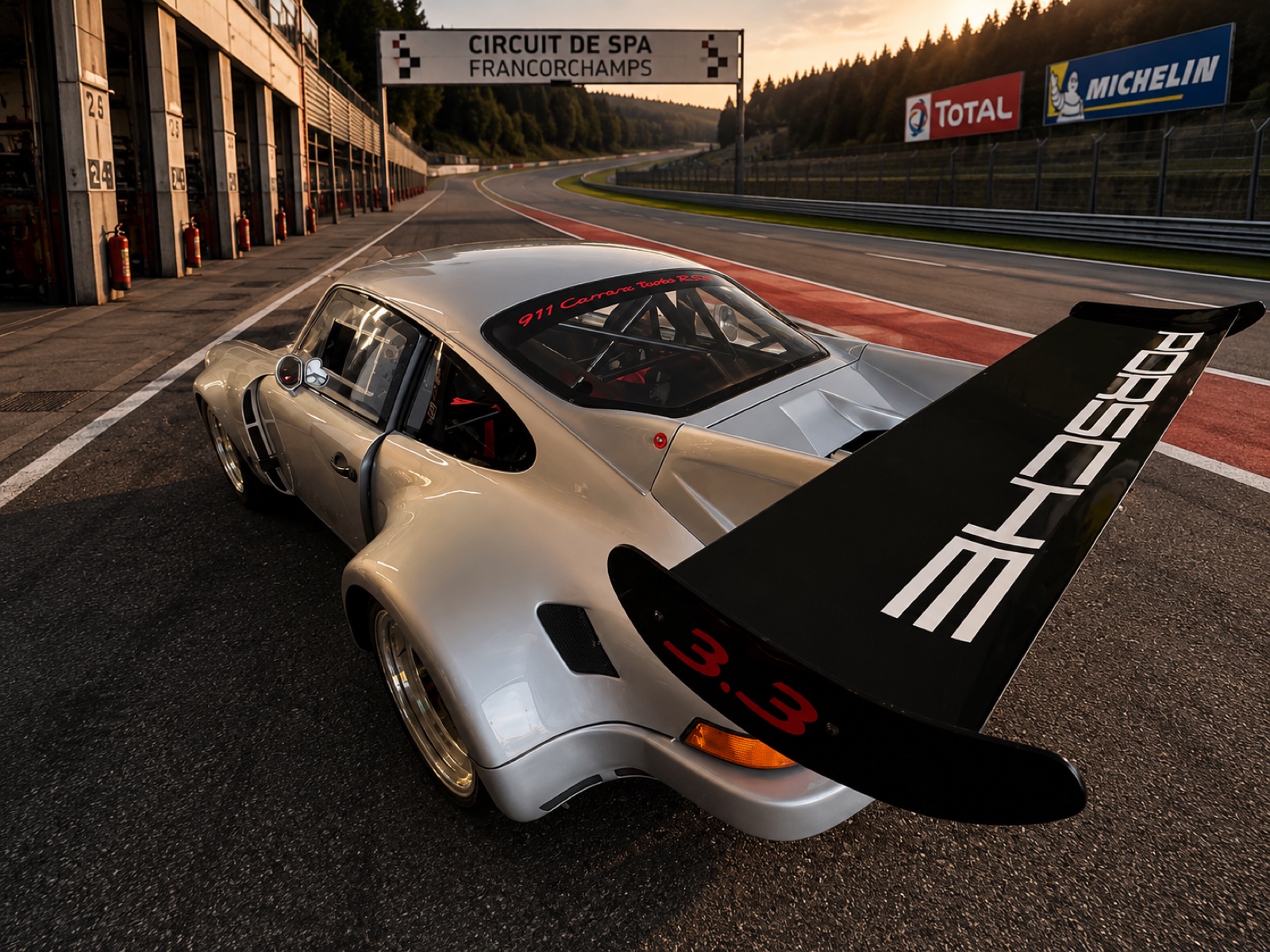
That creates an unusual proposition.
Drive it on local roads and experience an air-cooled Porsche with performance few road-going 911s can match. Take it to an open track day and explore the upper engine maps in the environment for which the chassis was engineered. Participate in appropriate Porsche, historic or club motorsport events, or simply arrive at the next Porsche gathering in something virtually nobody else will have.
This is not a car whose appeal is limited to being parked in a collection. It was built to be driven.
With only 1,584 kilometres (984 miles) since completion, the car remains essentially in its as-built condition and is accompanied by extensive documentation, engineering records, TÜV certification and build specifications.
For the Porsche collector, its significance differs from that of a factory RSR. It does not attempt to replace the original 1974 competition car, nor should it be viewed as one.
Its appeal lies elsewhere entirely.
This is a one-off interpretation crafted by experienced Porsche motorsport specialists, who had the freedom to combine one of the most exciting shapes from Porsche’s racing history with considerably more modern engineering and extraordinary performance.
It represents what can happen when the question shifts from “How accurately can we reproduce the past?” to: “What would we build if we could take the spirit of the 1974 RSR Turbo and create something to drive today?”
The answer is a 620-horsepower, 2,315-pound road-legal, air-cooled Porsche that can be driven to the track, exercised as intended and driven home again.
For the enthusiast who believes the greatest Porsche experiences still happen behind the steering wheel, that may be the most compelling specification of all.
RGB Motors Ref N° 146 is available now. Explore the complete specification, provenance and gallery or speak directly with RGB Motors.
Published 3 September 2026. Market observations reflect the time of writing. For a purchase decision, request the individual car’s current records and an independent inspection.
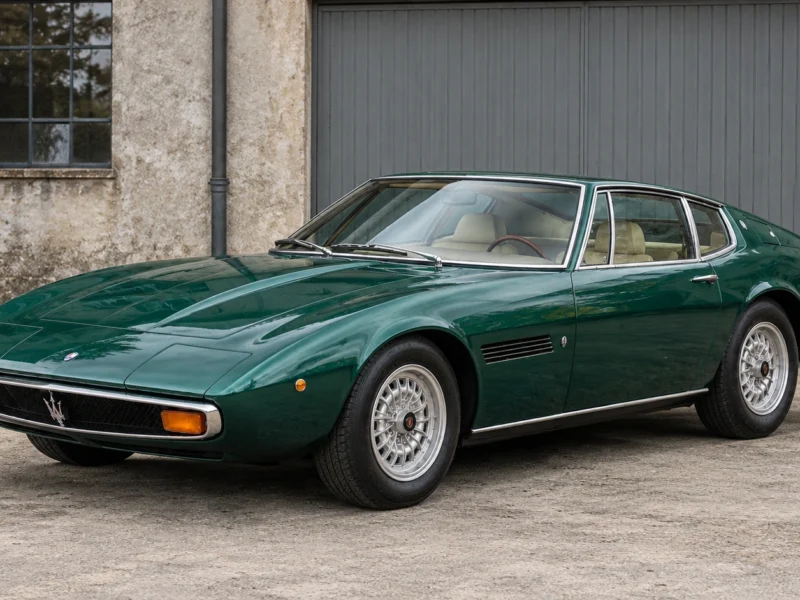
Why condition, originality, provenance, documentation and realistic pricing matter in a more discerning collector-car market.
Ralf G. Bahr welcomes Porsche’s continued investment in gasoline engines—and a future that gives drivers meaningful choice.
Your privacy choices
Optional Google Analytics helps us understand how the site is used. It stays off unless you allow it. Read our privacy policy.
