How to Sell Your Classic Car Without Leaving Your Garage
Why the best offer is rarely the highest one, and how professional representation moves a significant car without moving it at all.
Why the best offer is rarely the highest one, and how professional representation moves a significant car without moving it at all.
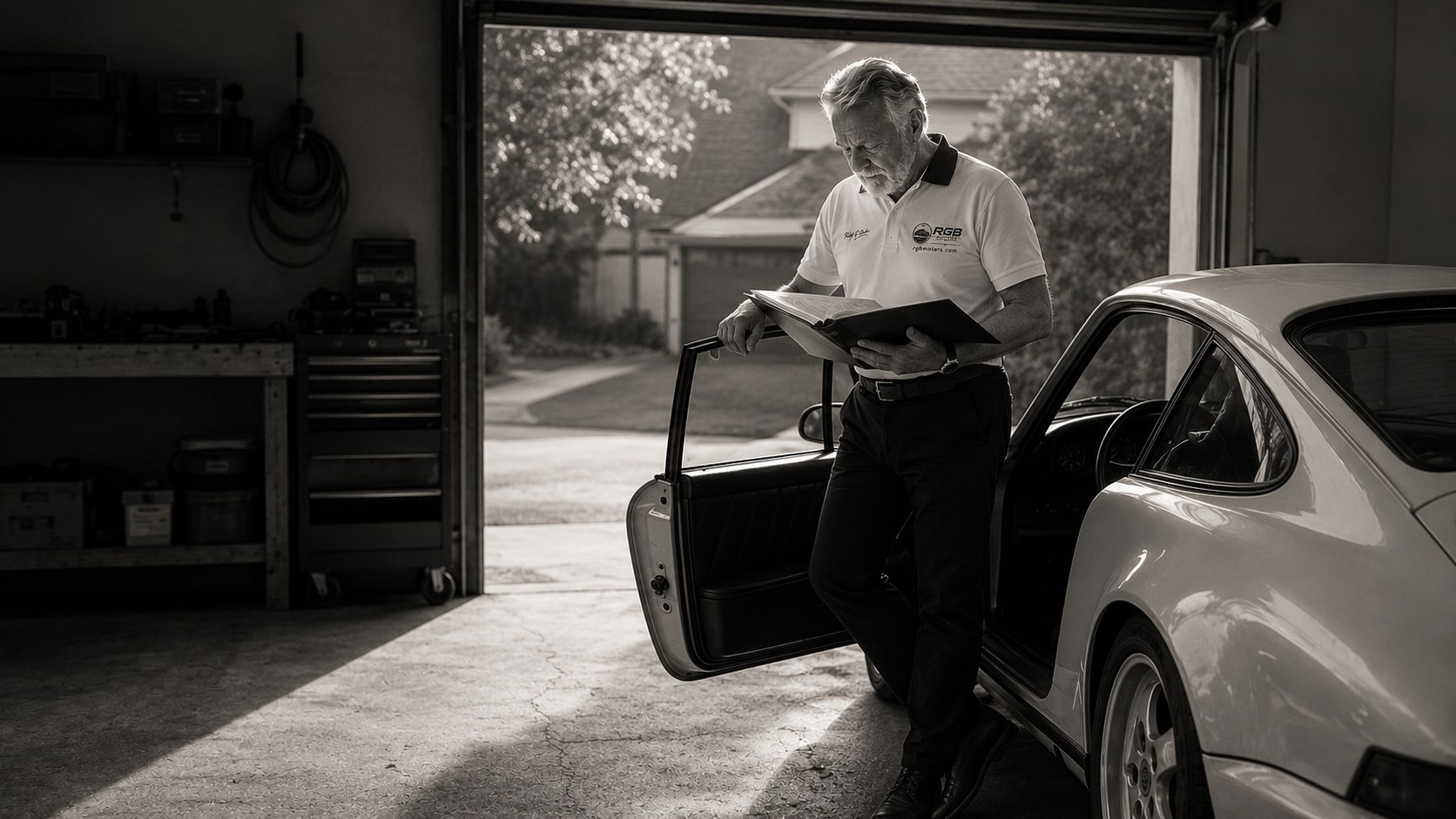
Every collector eventually faces a difficult decision. Not which car to buy, but when and how to let one go. Selling a collector car is not merely a financial transaction. It is the transfer of stewardship from one caretaker to the next, and for many owners, finding the right buyer matters as much as achieving the right price.
A significant car carries more than mechanical specifications. It may represent years spent searching for the right example, thousands of hours of preservation or restoration, and a great many memories made behind the wheel. Yet when the time comes to sell, most owners find the process far more demanding than they expected.
Online marketplaces attract attention. They also draw casual enquiries, unrealistic offers, and buyers who do not understand a car’s rarity, originality, provenance or long-term significance. Managing calls, arranging viewings, answering technical questions, screening prospects, negotiating terms, organising inspections and coordinating payment and transport becomes a full-time responsibility, and it lands on the person least able to be objective about the car.
Professional representation takes a different route. Instead of moving the car to a dealership or exposing it to an unqualified audience, the automobile stays where it is, safely in the owner’s garage, while it is evaluated, prepared, presented and taken to serious collectors.
The first problem is valuation. Owners compare their cars to advertised prices, but asking prices are not sales. Two apparently similar cars can differ enormously in originality, restoration quality, documentation, colour, equipment, mileage and ownership history. A realistic position requires reading recent transactions and knowing what informed buyers are actually chasing this season, not last.
The second is presentation. A handful of telephone photographs and a short description will move an ordinary used car. They rarely convey the significance of an important one. Buyers want to see bodywork, panel fit, paint, interior, engine bay, undercarriage, documentation, tools, accessories and numbers. They want the story told clearly, and they want it told accurately.
The third is the audience. The highest volume of enquiries does not produce the best result. The right buyer is usually the one who already understands the car and is prepared to act professionally. Reaching that person takes credibility, relationships and access to collector networks that never appear in public advertising.
The highest offer is not always the best offer. The quality of the buyer, the certainty of the transaction, and the ability to complete the sale smoothly can matter just as much as the number.
RGB Motors is an independent boutique brokerage, not a dealership. We specialise in Porsche, competition cars, significant American classics, European sports cars and carefully selected collector automobiles. We do not buy inventory. We represent cars on behalf of the people who own them, which means our interests and the owner’s interests point the same way.
Every assignment opens with a long conversation about history, ownership, originality, restoration, documentation, condition and market potential. Understanding what a car has been through is usually more useful than its specification sheet.
From there the car is placed in the context of current conditions: recent private sales, auction results, rarity, buyer demand and the quality of the comparable examples. The objective is not the highest possible asking price. It is a credible position that attracts serious buyers and protects the car from overexposure, which is the one thing a significant automobile never recovers from quickly.
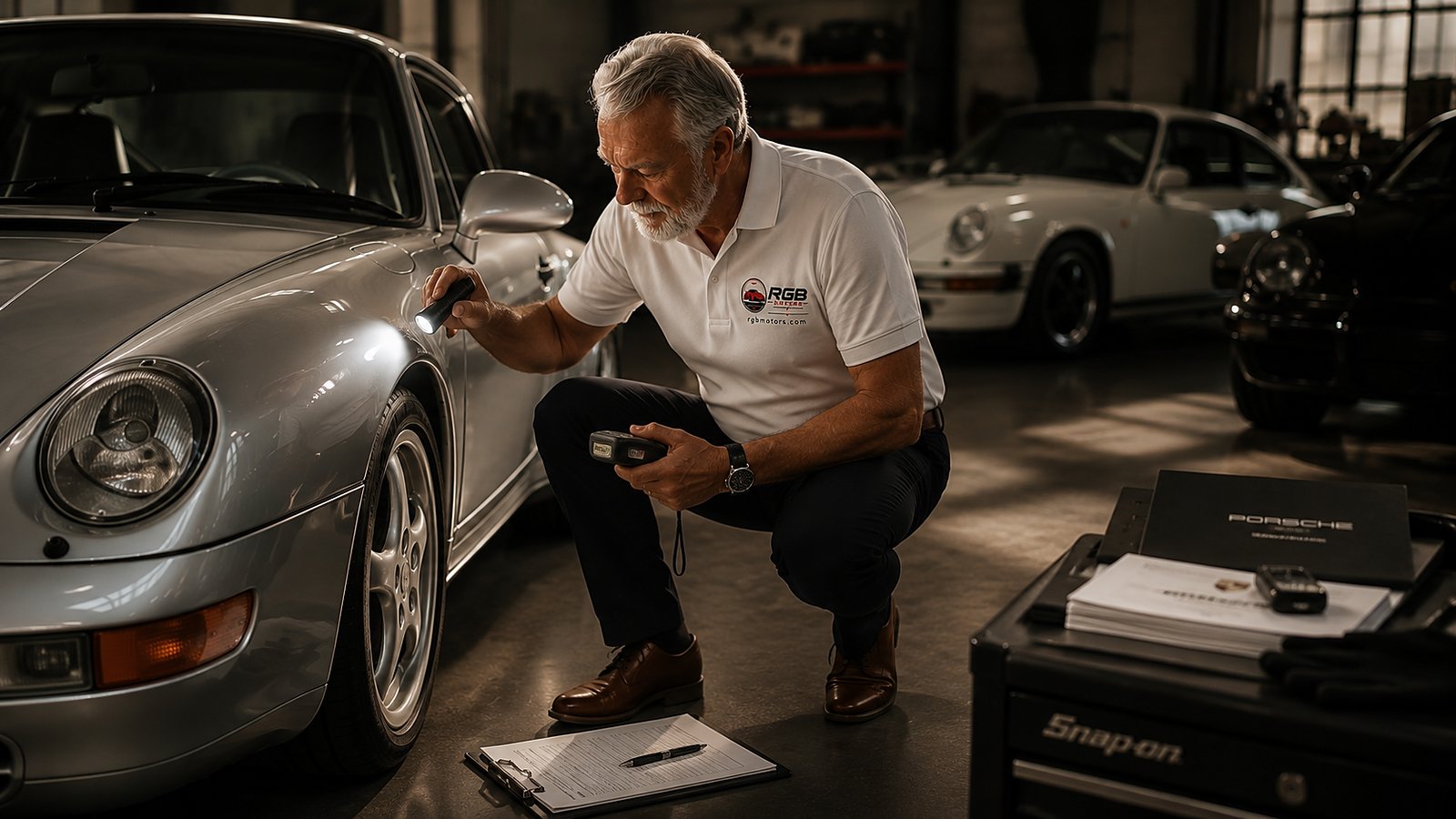
Collector cars deserve considered presentation: proper photography, an accurate vehicle summary, factory specification, ownership and restoration history, documentation highlights, and a clear account of what makes the car important.
It has to be thorough enough to answer the questions a knowledgeable buyer will ask, and honest enough to survive the inspection that follows. Credibility is the currency of this market. A well documented, professionally presented car builds confidence before anyone opens a door, and a car that oversells itself on the page loses that confidence the moment someone arrives with a torch.
Once prepared, a car can be introduced through selected channels: collector networks, marque clubs, enthusiast communities, social media, the RGB Motors site and this journal, and direct contact with buyers already known to us.
Not every car should be advertised at all. Some owners value privacy, and some cars are better handled quietly. In those cases suitable buyers are approached directly and the car never appears in public. It protects the owner, and it usually produces a shorter, more professional process.
Every enquiry is handled personally. Before a viewing is arranged, a prospective buyer is qualified: do they understand the car, are their expectations realistic, and are they in a position to complete. This protects the owner’s time, limits access to the car and removes an obvious security concern. It also means the serious buyers get the attention rather than competing with the curious.
Negotiating a collector car is not a conversation about price alone. It covers inspection findings, originality, restoration detail, spare parts, documentation, payment timing, transport and who is responsible for what. Independent inspections and authenticity evaluations are arranged where they are warranted. Once terms are agreed the transaction is documented, funds are confirmed and insured transport is booked. The owner stays informed throughout and approves every decision.
Every car is different, but the same qualities support desirability again and again: matching-numbers components, documented ownership, original factory records, restoration invoices, books and tools, rare colours or options, concours awards, competition history, professional inspections, and mileage that can be believed.
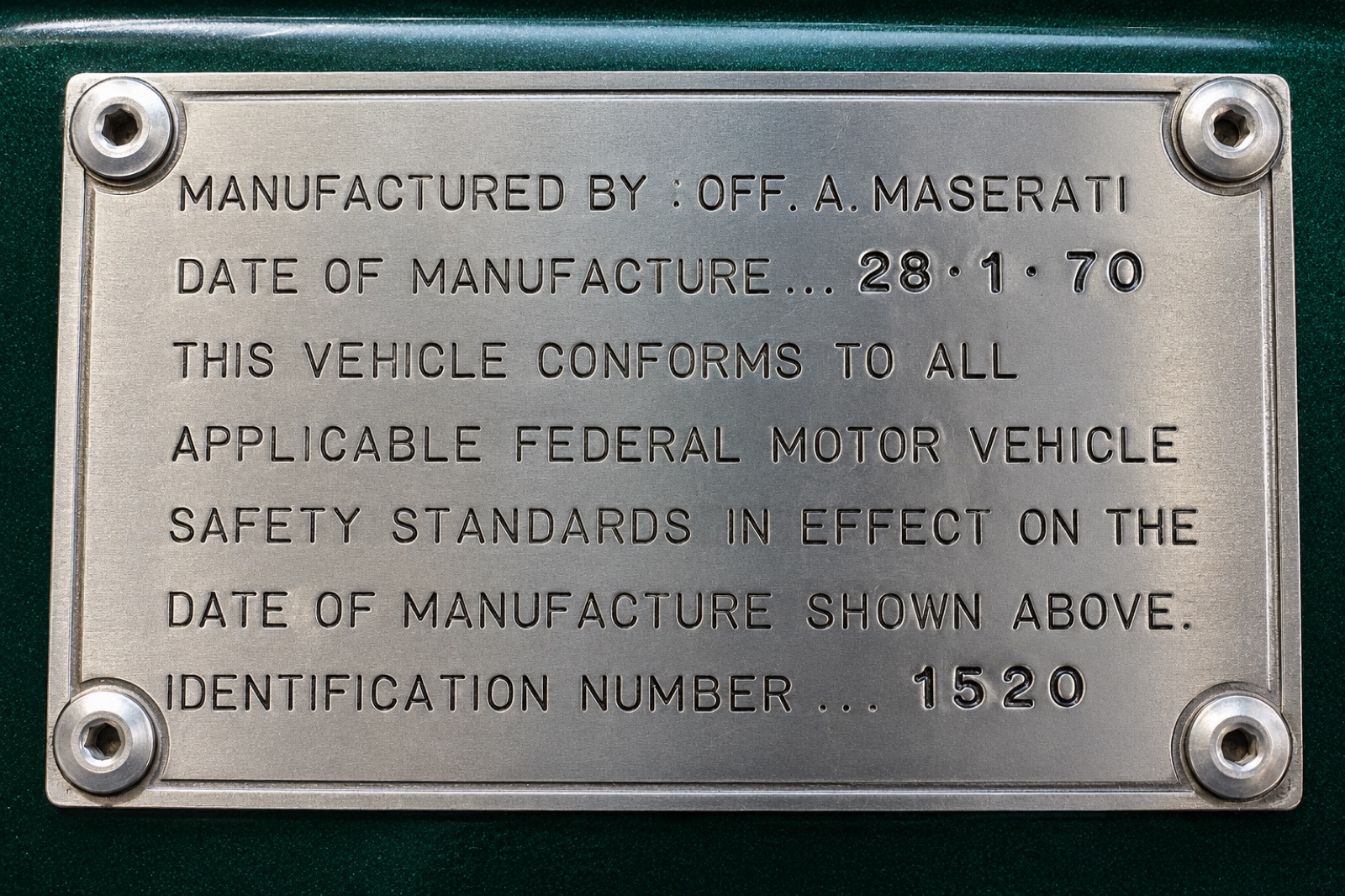
Documentation is often worth more than horsepower. A complete file raises buyer confidence, and buyer confidence is what moves the final number.
I have spent more than five decades around collectors, dealers, auction companies, specialists and enthusiasts in North America and Europe, and RGB Motors has been representing cars for more than twenty of them. What that time buys is not a directory of contacts. It is a sense of how a significant car should be evaluated, described and placed, and a fairly reliable instinct for which buyer is going to complete.
Whether the car is an early 356, an air-cooled 911, a concours American classic, a European grand tourer or a competition car with documented history, the job does not change: present it properly, protect the owner, and find the right person for it.
Selling a collector car should never feel like posting an advertisement and hoping. The best cars deserve knowledgeable representation, accurate storytelling, careful marketing, and a buyer who understands what he is being handed.
In most cases the car stays with its owner until a qualified buyer is found and the sale is complete. It is a discreet, efficient and secure alternative to the dealership model, and for a significant automobile it is very often the only one that makes sense.
We do not sell collector cars. We represent them. The full detail of how that works is set out under Vehicle Representation, and the cars we are placing at the moment are available here.
Thinking about selling? Tell us about the car, in complete confidence.
Published 24 July 2026. Market observations reflect the time of writing. For a purchase decision, request the individual car’s current records and an independent inspection.
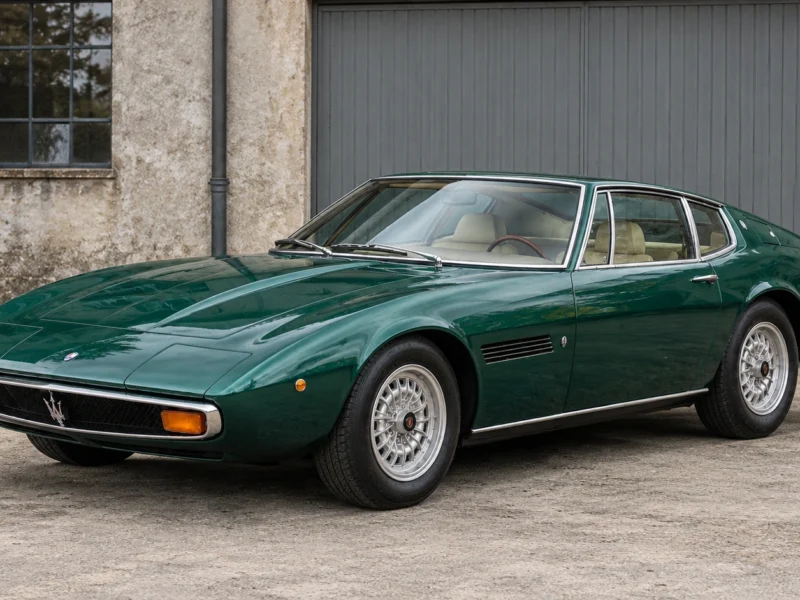
Why condition, originality, provenance, documentation and realistic pricing matter in a more discerning collector-car market.

Ralf G. Bahr welcomes Porsche’s continued investment in gasoline engines—and a future that gives drivers meaningful choice.
Your privacy choices
Optional Google Analytics helps us understand how the site is used. It stays off unless you allow it. Read our privacy policy.
