Buying the Last Air-Cooled 911
What we tell every client before they buy a 993. The range, the money, the valve guides, and the cars worth waiting for.
What we tell every client before they buy a 993. The range, the money, the valve guides, and the cars worth waiting for.
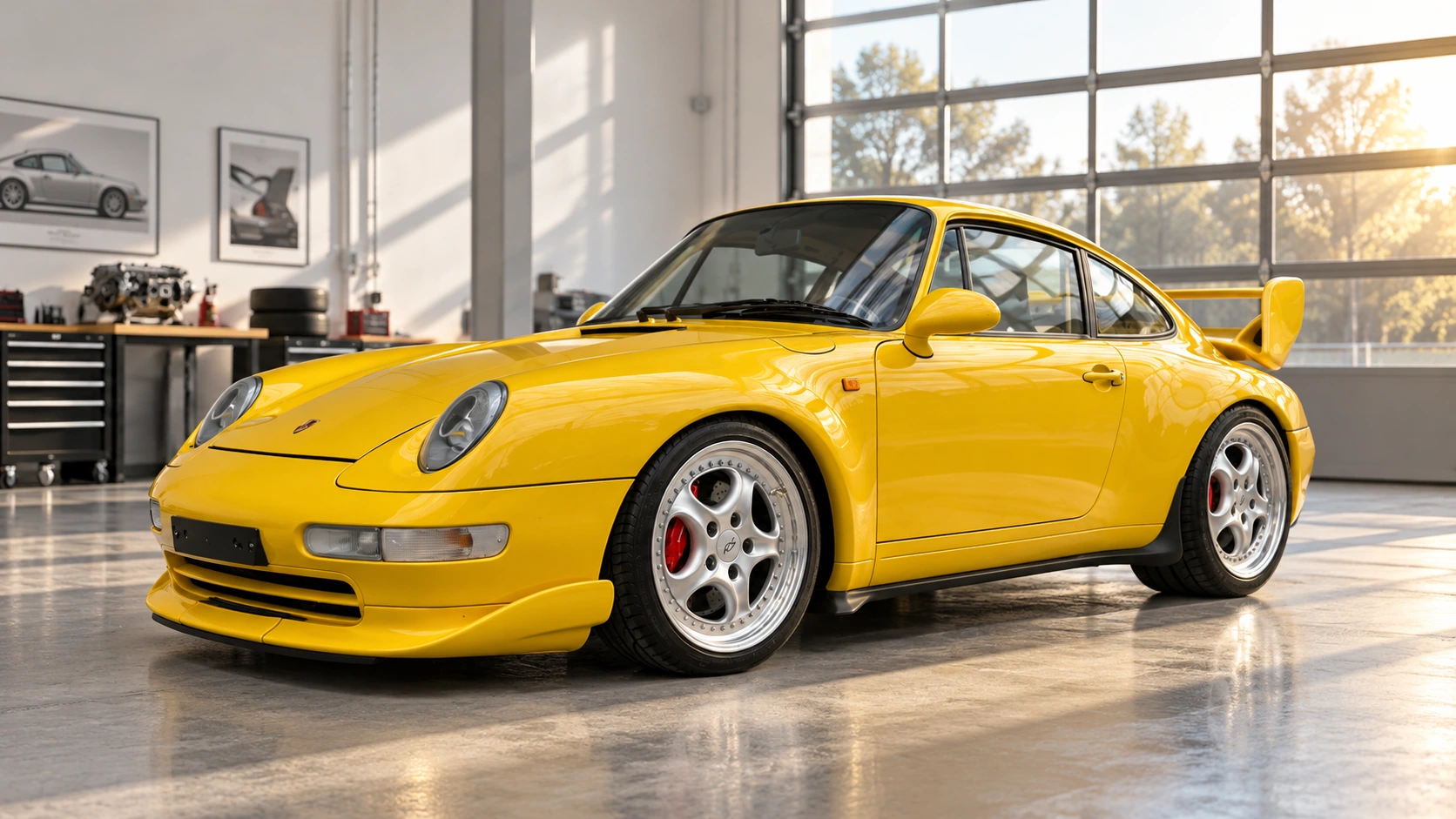
Porsche built its last air-cooled engine in March 1998 and bolted it into the back of a 993. That fact alone has carried the car from secondhand 911 to blue chip inside two decades. The earliest cars are past thirty now, and the gap between a good one and a wrong one has widened to the price of a complete engine. What follows is the conversation we have with every serious caller. It runs about eight minutes. It is cheaper than the engine.
The 993 arrived in 1994 to answer the two complaints that had followed the 911 for thirty years. The old trailing-arm rear suspension gave way to an aluminium multi-link axle on its own subframe, and the snap-oversteer stories mostly died with it. The shell was hot-dip galvanised and screwed together with the tightest panel gaps Zuffenhausen had ever managed. It was the first 911 that asked for no forgiveness.
The engine stayed honest. The M64 is a 3.6 litre dry-sump flat six, cooled by air and oil, now with hydraulic lifters that ended the scheduled valve adjustments of the earlier cars. A six-speed gearbox arrived with it, the first in a 911. Nothing about the car is delicate. It was engineered to be used, and the best ones have been.
Production ran four years and a little over 68,000 cars across every body and wing. The last air-cooled 911 left the line on 31 March 1998. Then the 996 arrived carrying radiators, and the 993 became the full stop at the end of a 34 year sentence.
None of that is why people call us. They call because of the way it drives. The steering is light and talkative. The ride is supple in a way no water-cooled 911 quite repeats. Past 5,000 rpm the engine makes a hard metallic sound the 996 traded for silence, and a VarioRam car fills the middle of the tachometer, which is where you live. It is quick enough today, and it is involving at any speed. That is the better currency.
Start with the Carrera coupe. The 1995 American cars carry 270 horsepower and the simpler OBD1 electronics. From 1996, the VarioRam intake lifted output to 282 and OBD2 diagnostics came with it. Both are correct answers. The 1995 car is the purist’s pick. The VarioRam car is stronger between 3,000 and 5,000 rpm, which is where you drive.
The Carrera 4 adds viscous four-wheel drive at half the weight of the system in the 964. It is invisible on a dry road and worth real money in a wet climate. The Targa of 1996 slides a glass roof over the cabriolet shell, an acquired taste that has now been thoroughly acquired. The cabriolet is the honest value: the same mechanicals, a plastic rear window, and a price some twenty percent behind the coupe.
The Carrera 4S of 1996 and the Carrera 2S of 1997 wear the Turbo’s wide body without its engine. The 4S carries the Turbo’s brakes, suspension and four-wheel drive. The 2S sends everything to the rear axle and is the rarer of the two. Both have pulled away from the narrow cars in value, and neither shows any sign of looking back.
The Turbo arrived in 1996 with two turbochargers, four-wheel drive and 400 horsepower, the fastest road car Porsche had offered since the 959. The Turbo S of 1997 added power and subtracted supply; America received fewer than two hundred. The GT2 deleted the driven front axle, bolted on its arches and went racing, and its road cars now trade in seven figures. If your plans involve a GT2, you do not need this guide. You need an auction paddle and patience.
Europe kept the Carrera RS, a 3.8 litre homologation car with 300 horsepower that America never sold. The 25 year rule has opened that door, and imports are landing now. It is the collector’s 993, at the collector’s price.
The four-speed Tiptronic exists across the Carrera range. It is a competent device in the wrong car. Pay a quarter less than the manual, and expect the same discount when you sell. Buy one knowingly or not at all.
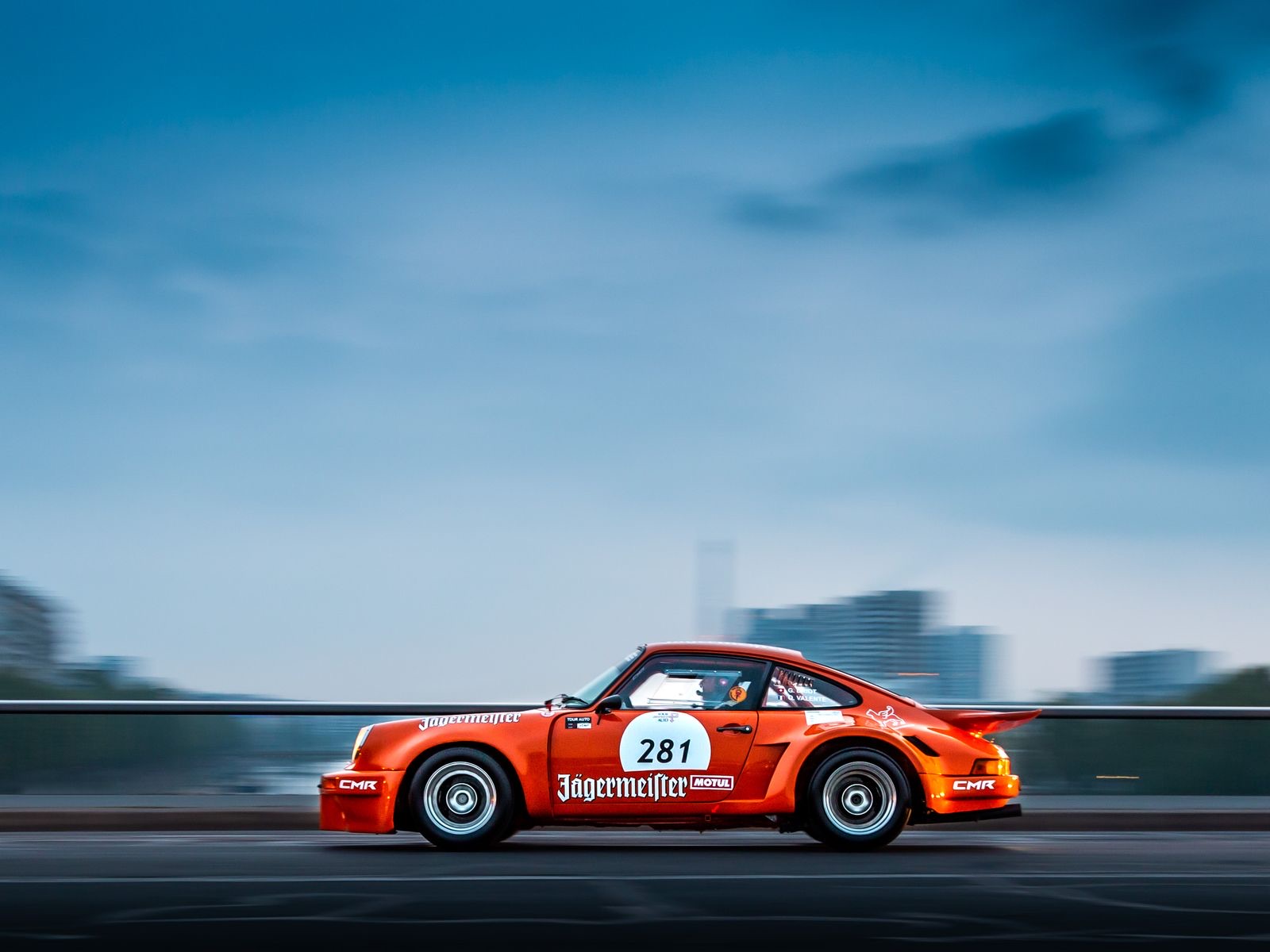
Every 993 conversation arrives here, so we will go first. The factory fitted valve guides in a material that wears. On most engines they are finished somewhere between 60,000 and 120,000 miles. Worn guides announce themselves three ways: blue smoke on a cold start that lingers, oil consumption past a quart every six hundred miles, and, on American cars, a blocked secondary air system.
Buy the story of the engine before you buy the paint. A leak-down number does not flatter.
The secondary air point matters because it turns a wear item into a legal problem. From 1996, the OBD2 cars pump air into the exhaust ports on cold starts. Oil past worn guides cokes those ports shut, the P0410 fault follows, and a failed emissions test follows that in any state which checks. The ports can be cleaned in place, but if the guides are gone the carbon returns. The permanent fix is a top end: guides, seals, a valve job, gaskets. Budget $20,000 to $30,000 at a shop that knows the engine. A full rebuild starts around $40,000.
So price every 993 as if the top end is due, unless paperwork proves it has been done. That one sentence pays for this article.
The rest of the engine asks little. There are no cam belts; the chains live in oil and last. The one belt that matters hides inside the twin-distributor housing, linking its two rotors. When it fails, six of the twelve spark plugs stop firing and the catalytic converters absorb the consequences. Porsche’s vent kit largely cured it. Ask when the housing was last opened, and be suspicious of a seller who does not understand the question.
Oil goes in twelve quarts at a time and leaves through gaskets. A damp valve cover is a 993 being a 993. Oil on the floor, on the clutch or in the fan is a different conversation. Check the level warm, at idle, on flat ground. The gauge misleads people who read it cold.
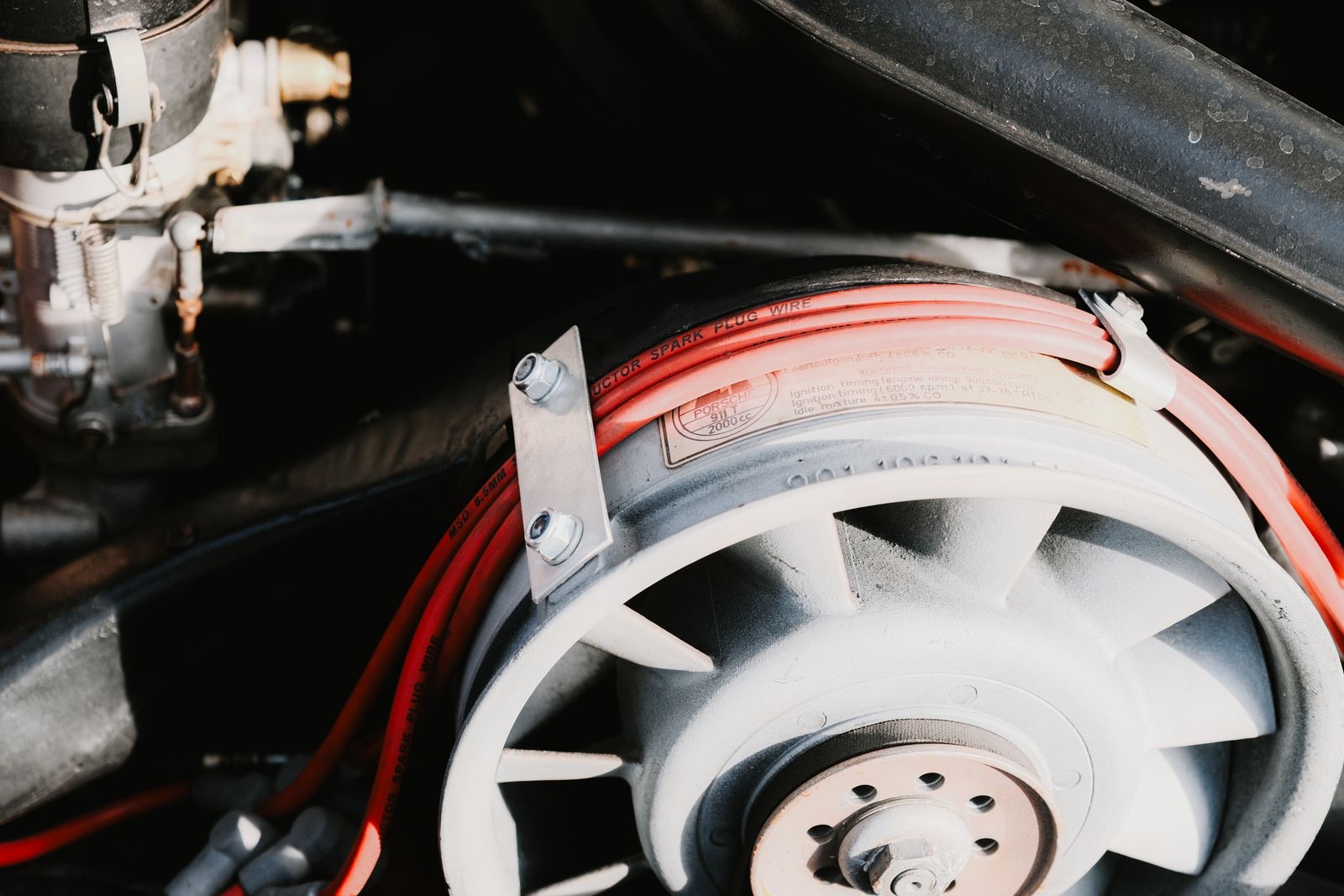
The G50 six-speed is one of the great gearboxes. Its only habit is a second-gear synchro that objects on cars shifted hard while cold. Try second deliberately on the test drive, before the oil warms. Rebuilds are possible and not cheap. A record of fluid changes is the inexpensive insurance.
Clutches last 60,000 miles or more when treated properly. The job means dropping the drivetrain, so budget around $5,000 and have the flywheel and rear main seal inspected while everything is out. A light seep at the rear main is common and rarely urgent.
On a Carrera 4, tyres are the tell. The driveline reads rolling circumference, so four matched tyres with matched wear are part of the maintenance, not an accessory. Four different date codes on four corners describe the previous owner better than he would describe himself.
Rust is the exception. The galvanising works. Look anyway: the windscreen surround after a cheap glass job, the battery tray, the sunroof drains, the bottoms of the doors. Corrosion on a 993 usually marks an old repair, which is the more important discovery.
Accidents are the real enemy. These cars left the factory with shutlines you could set a vernier by, so a door standing proud or a bonnet gap that wanders is telling you something. Bring a paint gauge and read every panel. Lift the boot carpet and look for ripples and fresh seam sealer. A repaired 993 can be a fine car at the right price. The problem is the repaired car priced as a straight one.
The suspension is aluminium and mortal. Worn drop links and control-arm bushings arrive as a clunk over broken pavement, tired dampers as a float the car never had when new. A full refresh is ordinary money for this class of car and returns the chassis to factory behaviour. On cars wearing the hollow-spoke eighteen-inch wheels, check for slow leaks and clumsy repairs. Those rims are welded, not cast, and they do not forgive a careless refurbisher.
The interior outlasts its owners. What fails is specific. The air-conditioning evaporator lives behind the dashboard and is priced like it. Window regulators slow down before they stop. The driver’s bolster wears, the sunroof cassette creaks before it sticks, and an airbag lamp is usually a seat sensor. Test every switch, twice. On a car this analogue, everything is supposed to work.
Targas add their own list: the shade motor, the seals, a creak over ridges that some cars have and some never develop. Cabriolet tops are durable, but the plastic rear window clouds and a replacement is routine. Confirm the interior is the one the car was born with. Correct seats and uncut door cards will matter more at resale than another thousand miles ever could.
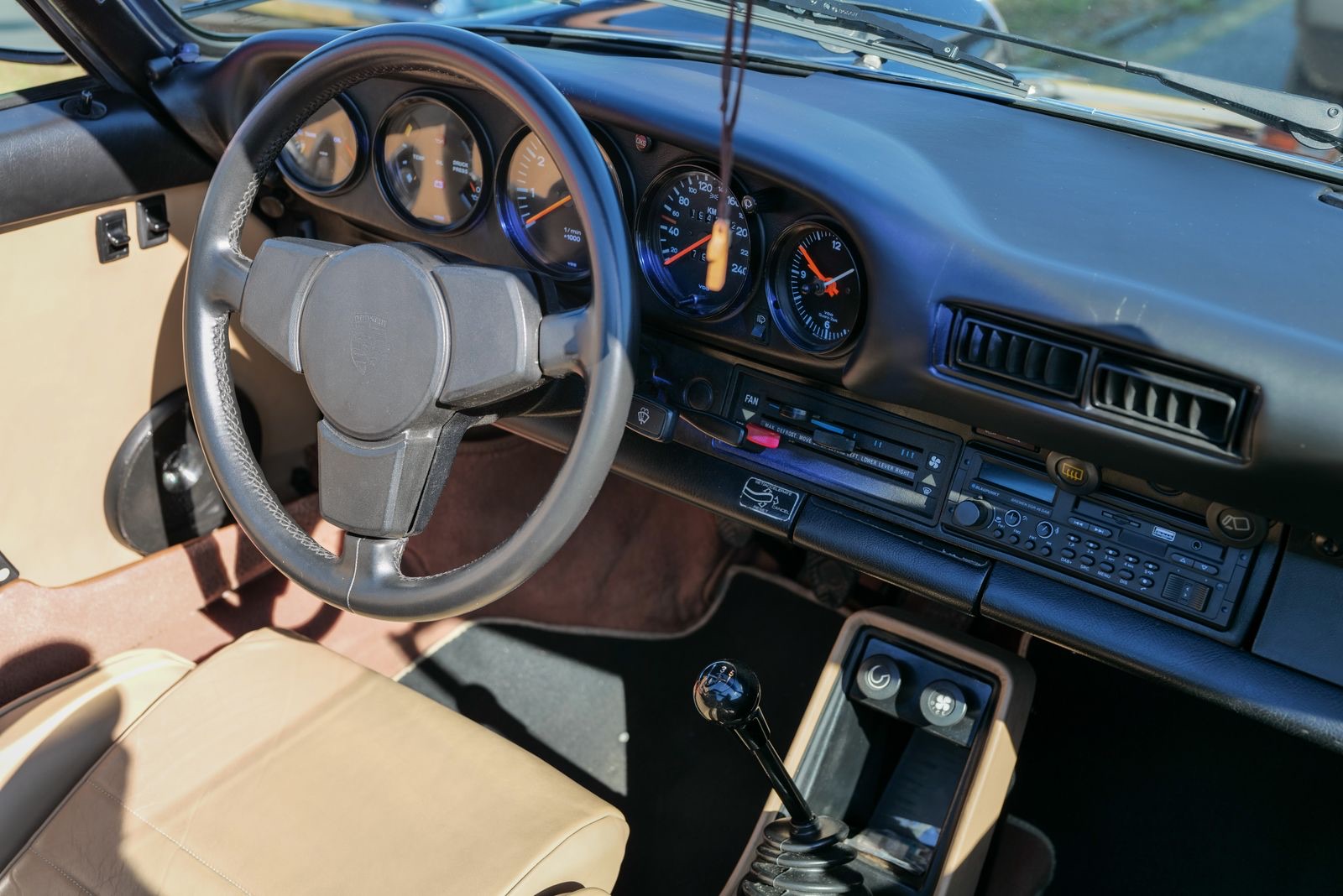
Order the Porsche Certificate of Authenticity before you view the car. It records the engine and gearbox numbers, the original colour and every option code. Stand in front of the car and make the two agree. Matching numbers on a 993 are not romance. They are the difference between market price and a discount nobody offered you.
Mileage is a number. History is a fact. Pay for the fact.
A thick binder beats a low odometer. A 90,000 mile car with twenty five years of invoices, a documented top end and four matching tyres is a better buy than a 40,000 mile car with a decade of silence in the file. Cars earn low mileage by sitting, and sitting is its own damage. Seals dry. Fuel varnishes. Air conditioning dies quietly in the dark.
Options worth paying for: the limited-slip differential, sport seats, a sunroof-delete coupe if you can find one, and colour. Silver is the default and priced accordingly. Speed Yellow, Riviera Blue, Ocean Blue, Arena Red and the paint-to-sample cars carry premiums that reach five figures.
Then the inspection, which is not optional. Use a shop that lives inside these engines, not a general European garage. The list: leak-down on all six cylinders, a borescope through the plug holes, secondary air function on OBD2 cars, distributor-belt history, gearbox oil condition, a paint map, and a cold start on camera the morning of the viewing. Two hours of labour, weighed against six figures of car. There is no version of this purchase where skipping it is clever.
The numbers below are asking ranges for real cars in the American market as we write, in the middle of 2026. Condition moves them. History moves them further. None of them apply to a car without records.
Tiptronic cabriolets open the market around $55,000. Honest manual Carrera coupes with normal miles run $75,000 to $100,000. The best VarioRam coupes with history trade between $110,000 and $140,000, and exceptional cars, low miles, rare colour, every stamp, clear $150,000 without effort. Targas sit near the cabriolets and have been climbing.
The wide bodies have left the narrow cars behind. A Carrera 4S is a $120,000 to $170,000 car, and the rarer 2S runs higher still. Turbos start around $160,000 driven and reach $250,000 with a file and low miles. A Turbo S is a $400,000 to $600,000 conversation, a GT2 a seven-figure one. Imported Carrera RS cars have been landing between $300,000 and $450,000 depending on specification and honesty.
One rule survives every cycle: the cheapest 993 is the most expensive one. The $25,000 between a fair car and a great car is one valve-guide job. Buy the great car.
A 1996 or 1997 Carrera coupe. Six-speed, limited slip, a colour rather than a shade of grey, and a binder that reaches back to the first owner, with the top end done or priced into the deal. That car does what the poster cars do, at a third of the money, and it has yet to make a patient owner poorer.
We keep a shortlist of 993s we would put our own name to, and we inspect before a client commits, wherever the car sits. If you are serious about the last air-cooled 911, use the direct line. It reaches a person, and the person has done this before.
Published 20 July 2026. Market observations reflect the time of writing. For a purchase decision, request the individual car’s current records and an independent inspection.
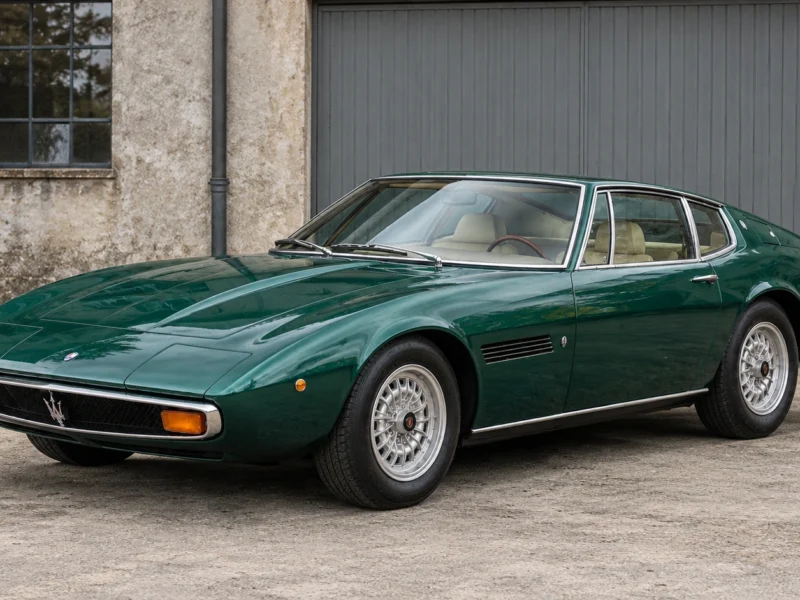
Why condition, originality, provenance, documentation and realistic pricing matter in a more discerning collector-car market.
Ralf G. Bahr welcomes Porsche’s continued investment in gasoline engines—and a future that gives drivers meaningful choice.
Your privacy choices
Optional Google Analytics helps us understand how the site is used. It stays off unless you allow it. Read our privacy policy.
