A Lifelong Connection to the Nürburgring
I grew up about 50 miles from the Nürburgring, near Cologne. In the mid-1960s, as teenagers, my friends and I would ride our small 50cc bikes out to the track for the weekend. We camped nearby, soaked in the atmosphere, and watched races on both Saturday and Sunday.
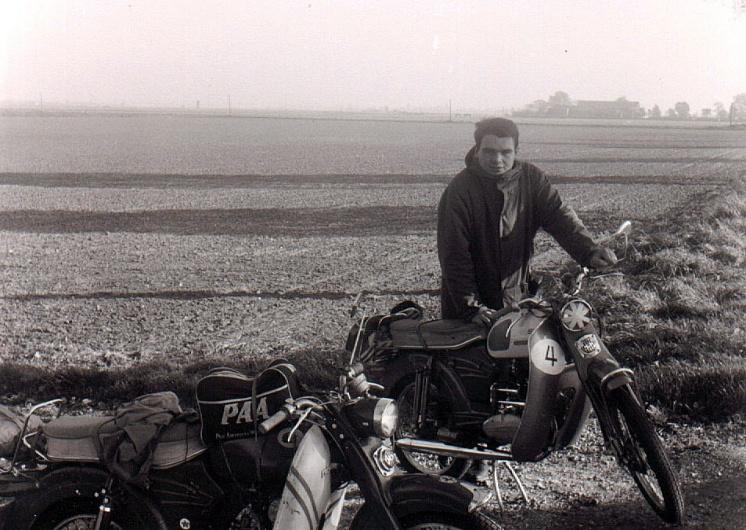
The weather in the Eifel region, part of the Ardennes, was never predictable. Sudden rain showers were common, and more than once we ended up soaked. But none of that mattered. We were captivated by the sound, speed, and the incredible variety of racing machines, tackling what would later become legendary.
From Spectator to Driver
After completing my service in the Luftwaffe (German Air Force), I transitioned from spectator to participant. In my early twenties, I began modestly with a small souped-up Italian Autobianchi A112, but it wasn’t long before I progressed to more serious racing machinery:
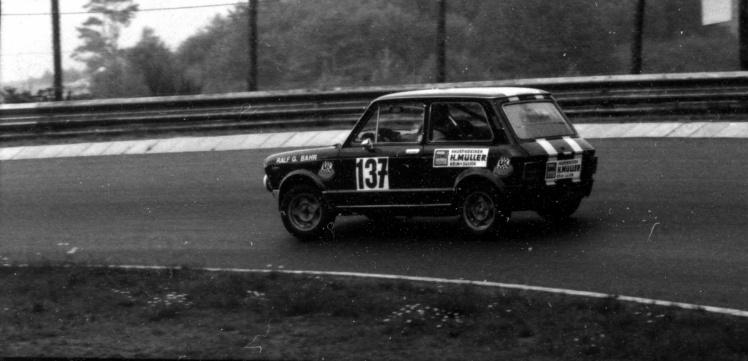
- A Group 2 Ford Escort RS powered by a 2-liter Cosworth engine
- Later, a brief but unforgettable period racing in Group 2, a 3-liter Ford Capri RS
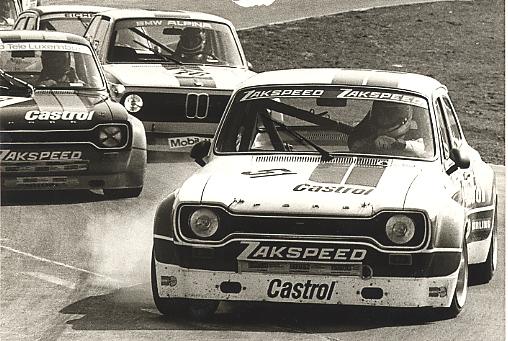
In the early 1970s, my focus shifted primarily to endurance racing — 12-hour, 18-hour, and 24-hour events. These races required teams of at least three drivers, each taking roughly two-hour stints behind the wheel. Success demanded not only speed, but also physical endurance, concentration, and mechanical sympathy.
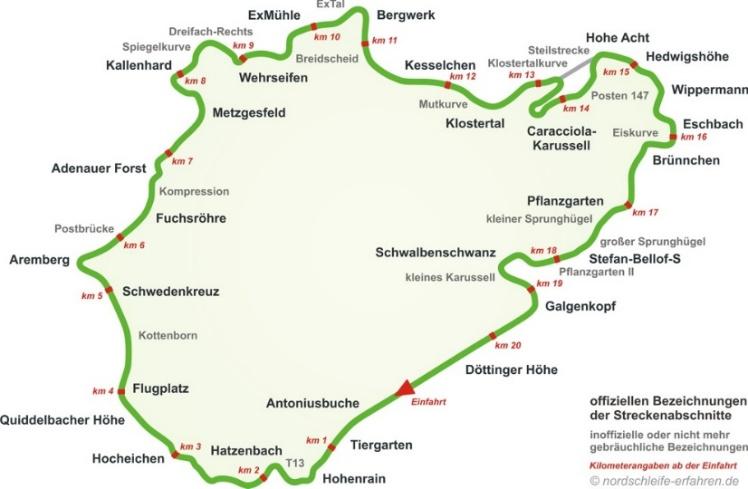
The classic Nordschleife itself was a relentless challenge — roughly 170 turns per lap and elevation changes of approximately 300 meters (1,000 feet), with the circuit reaching up to 620 meters (2,035 feet) above sea level. With manual gearboxes, no paddles, no electronics, and in a Group 2 car typically equipped with a 4- or 5-speed transmission, you were constantly at work, making an estimated 310 to 350 gear changes per lap. It was a true test of both driver and machine.
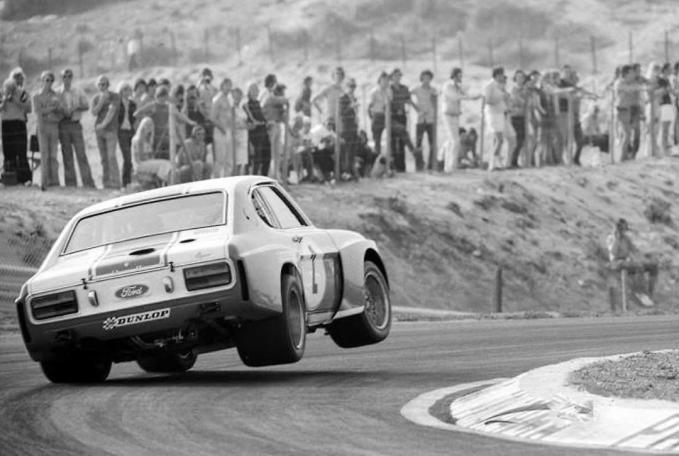
There was something special about races like the Nürburgring 18 Hours. They weren’t just competitions; they were experiences that stayed with you long after the checkered flag.
The Nordschleife had its own rhythm. You would start in daylight, settle into your stint, and before you knew it, the light would begin to fade. Night would fall over the forest, and the track would change completely. Corners you thought you knew suddenly felt different. Visibility narrowed, focus sharpened, and every lap demanded respect.
And then there was the Eifel weather, never predictable, always part of the challenge. You could have clear conditions at the start and finish line, sitting at around 620 meters (2,035 feet) above sea level, yet just a few miles away, down in Hatzenbach, nearly 120 meters (400 feet) lower, you might suddenly encounter heavy fog or rain.
Communication was equally tough. Because of the terrain and the length of the track, contact between drivers and the pits was limited, mostly along the long straight near Döttinger Höhe and the start/finish area. Once you were on the lap, you were mostly on your own, relying on instinct, experience, and how the car felt.
Night driving introduced a whole new challenge. In the smaller Group 2 cars, lap times would reach around 12 minutes. Fatigue set in, visibility was reduced, and the track’s rhythm demanded even greater concentration. Each lap required patience, precision, and full focus.
Starting fields were large by today’s standards, often with close to or more than 120 cars taking the green flag. With such a mix of machinery and performance levels spread across the long Nordschleife, traffic was constant, and managing it became an essential part of endurance racing.
Traffic was steady and often intimidating. The speed difference between groups could be substantial. Slower cars were always at risk when professional racing teams approached at high speed, taking the optimal racing line. Often, little room is left, forcing smaller cars toward the edge of the track, sometimes even off it. It required alertness, quick judgment, and a lot of respect among drivers.
What made those races truly unforgettable was the atmosphere. It wasn’t just professionals; it was a mix of drivers, backgrounds, and ambitions. Touring cars, GT cars, and more specialized machines all shared the same narrow strip of asphalt. There was a strong sense of camaraderie, even among competitors.
It was raw, mechanical racing. No electronics, no safety nets, just the driver, the car, and the track. You listened to the engine, felt every movement, and managed the car for hours, not just laps.
Looking back, it was demanding, unpredictable, and at times exhausting — but above all, it was deeply rewarding. Those moments on the Nürburgring remain some of the most vivid and meaningful experiences of my racing years.
Like many of us, life eventually got in the way. A growing career, financial priorities, and family responsibilities caused me to step away from racing and shift to a more “civilized” form of motorsports enthusiasm. My love for the Nürburgring remained unchanged even after I immigrated to the USA in the early 80s. Almost every time I visit Germany, I must go to the Nürburgring and drive several laps, which brings back memories and makes my time there even more enjoyable.
Driving the Nürburgring Today
Today, as a Tennessee resident and an active member of the local Porsche Club, I’m often asked about the Nürburgring. Many fellow members dream of visiting and even driving the legendary circuit on a trip to Germany. For those ready to turn that dream into reality, here is a practical guide to getting on track.
The Nürburgring, especially the Nordschleife, is one of the oldest, longest, and most challenging racetracks in the world. Jackie Stewart famously called it “The Green Hell,” a name that has endured ever since.
Traveling to the Nürburgring
Fly into Cologne Bonn Airport (closest), Düsseldorf, or Frankfurt, and rent a vehicle.
- Cologne Bonn Airport (CGN) — 101 km / 63 miles
- Düsseldorf Airport (DUS) — 144 km / 89 miles
- Frankfurt Airport (FRA) — 163 km / 101 miles
While trains are available, public transportation is inconvenient. Renting a car is strongly recommended. Best destination at the Ring: Nordschleife Parking — within walking distance of the entrance and Devil’s Diner.
When Can You Drive?
Touristenfahrten sessions occur at specific times:
- Mainly on the Nordschleife
- Occasionally on the Grand Prix circuit (GP)
Check:
- Official Nürburgring calendar
- Track status (closures due to accidents or cleanup)
Insurance — Read Carefully
Many visitors assume the Nürburgring is a public toll road and that they are fully insured. This isn’t entirely accurate.
- Standard insurance does not cover Nürburgring driving
- Damages to track barriers can be charged to the driver
- Always verify coverage beforehand
Your Options at the Nürburgring
During Touristenfahrten (tourist driving sessions), you have several options:
- Your own car
- A specialized rental car (from companies insured specifically for Nürburgring driving)
- A passenger experience (Ring Taxi) — a high-speed lap with a professional driver
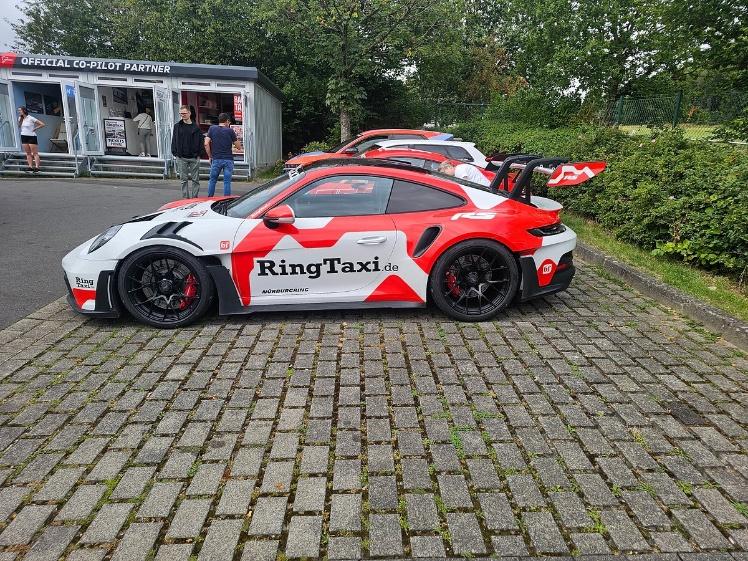
Typical Ring Taxi experiences
- Genesis Track Taxi — €70 per lap (~$77)
- Porsche Cayman GT4 / GT3 — €299 per lap (~$330)
- Porsche 911 GT3 RS — €649 per lap (~$715)
Expect about 30 minutes total experience, with approximately 10 minutes of actual lap time.
Tickets & Pricing
The Nürburgring uses a prepaid system called Green Hell Credits (GHC).
Typical pricing:
- €30 per lap (Mon – Thu) — ~US $35
- €35 per lap (Fri – Sun & holidays) — ~US $41
- €35 for GP circuit sessions — ~US $41
You can purchase credits online or on-site.
Getting on Track
- Enter via the Nordschleife entrance near Devil’s Diner
- Scan your card at the barrier
- No reservation required
And just like that, you’re on one of the most iconic tracks in the world.
Driving the “Green Hell” in a Porsche
Driving the Nürburgring is not like a track day. It operates under public road rules.
- Insurance: Many policies exclude Nürburgring driving — verify in advance.
- Respect the car: Even a Porsche can be challenged here.
- Follow the rules: This is not racing. Pass left, stay alert.
- Know your limits: The track is long, fast, and unforgiving.
- Strict awareness of faster cars.
- If you have an emergency while on the track, call +49 2691 302 9111.
Capture the moment
Photographers are stationed around the track, and you’ll likely find professional photos of your lap afterward. Friends and family can watch from various viewing points along the circuit.
Final Thoughts
The Nürburgring is more than just a racetrack to me; it’s a lifelong bond. From my early days on a 50cc bike, soaked in Eifel rain, to competing in endurance events, and now sharing stories with fellow Porsche enthusiasts here in Tennessee, it remains a place like no other.
Over all those years, one thing has remained constant: sports cars, and particularly Porsche drivers, belong at the Nürburgring.
Few experiences connect driver, machine, and history as powerfully as a lap of the Nordschleife.
Whether you are a Porsche enthusiast or simply a lover of performance driving — if you ever have the opportunity to experience the Nürburgring, take it. Drive it yourself or ride alongside a professional; the result is the same. The Nürburgring leaves a lasting impression.
Just remember to respect the track, know your limits, and enjoy every moment.
If you are planning a visit and would like tips or guidance, feel free to reach out: info@rgbmotors.com or +1 561 702 9700.