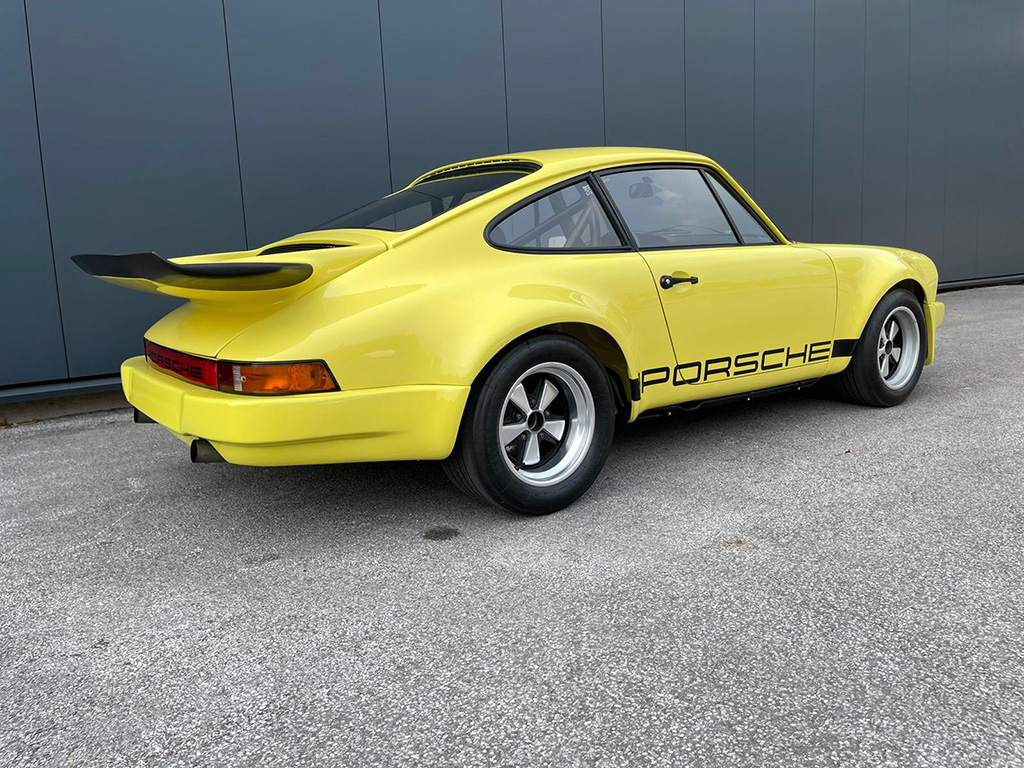
The 993 GT2 was conceived as a homologation special for GT1-class competition — a road car only because the rulebook required one. Porsche built fewer than 200 GT2 chassis between 1995 and 1998, and the racing variants are vanishingly rare. The Mamerow examples are rarer still.
Mamerow Racing was, for nearly two decades, one of the most consistent privateer teams in the German national championship. They campaigned a series of 993 GT2s with disciplined preparation, modest sponsorship and a quiet refusal to chase headline-grabbing results. The cars finished. The cars improved. The cars retained value.
Mamerow campaigned cars the way a marque historian writes — carefully, with footnotes, and no impulse to be loud.
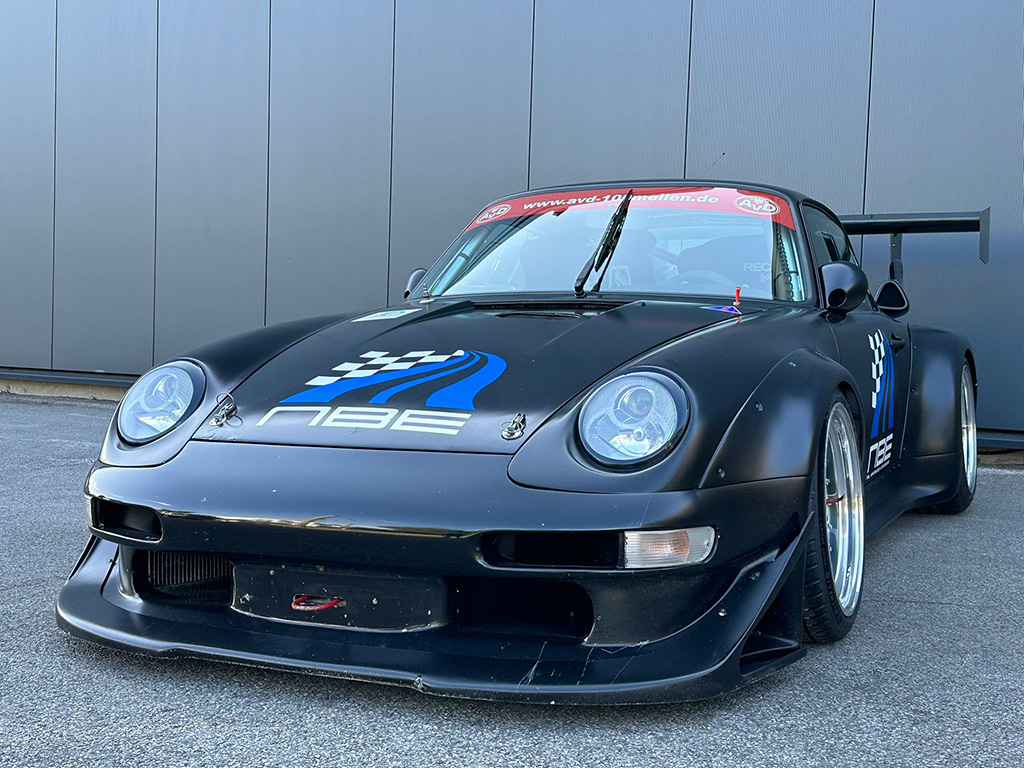
The factory wide-body, with steel arches and louvred fenders — unchanged from new.
This chassis carries its original Mamerow livery, its FIA paper trail, and a service log that reads like a diary. Brake fluid intervals. Engine seal dates. The exact mileage at every track day for fourteen years.
It is not the fastest 993 GT2 in private hands. It is one of the most documented. For a collector who values the story as much as the lap time, this is a different proposition than the equivalent road car — and a more interesting one.
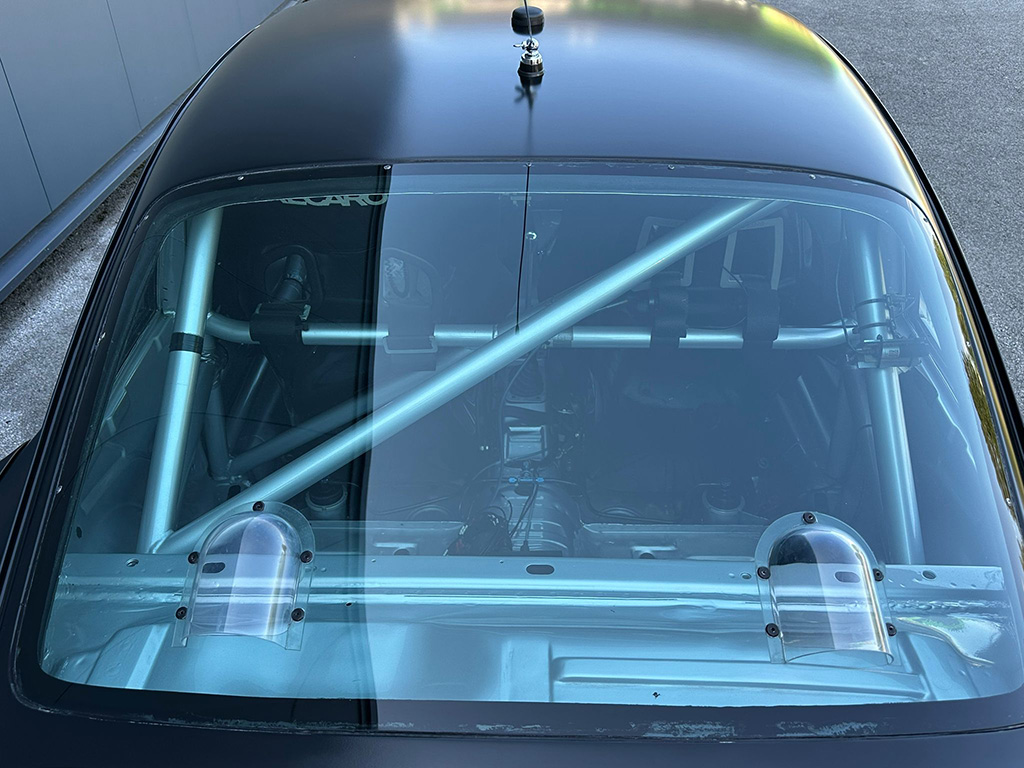
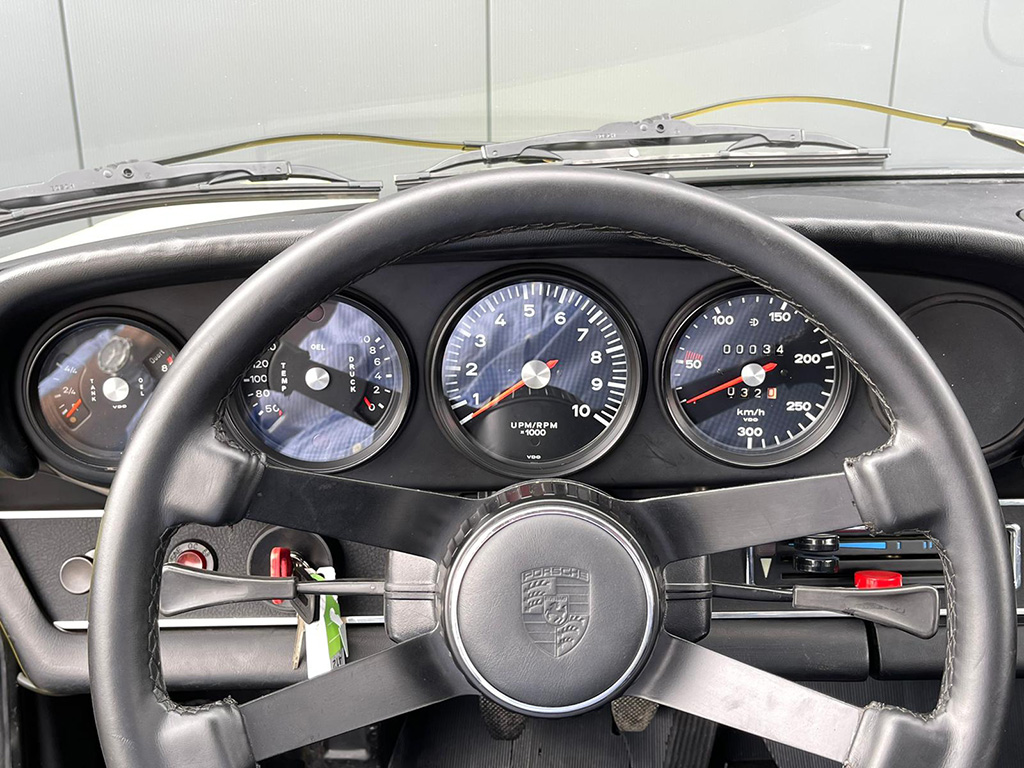
The cockpit — unrestored, original, and exactly as Mamerow last campaigned it.
The car is now offered through RGB Motors. Full dossier on request.
The 3.0 RS, Honestly
The 1973 Carrera 3.0 RS is one of the most coveted Porsches in the world. It is also one of the most routinely confused with its lighter, smaller sibling, the 2.7 RS. The two cars are related, but they are not the same proposition — and the market is finally beginning to treat them differently.
What it is
For 1974, Porsche enlarged the Carrera RS engine to 3.0 litres and stiffened the chassis around it. The result was a homologation special with twice the wing area, half the door panel and an extra 800 rpm of usable range. 109 road cars left Zuffenhausen. Most went directly to privateer racing teams. Some never left the showroom.
The 3.0-litre flat-six — 230 horsepower, twin-plug ignition, and a dry sump pressed into a road car.
What to look for
Originality of the engine is non-negotiable. Many 3.0 RS chassis were re-engined during their racing lives, which is part of their history but a different value proposition. A matching-numbers car — confirmed by Porsche Certificate of Authenticity — commands a clear premium. We have inspected cars at every point on this spectrum.
The bodyshell is the other story. RS-spec lightweight body, factory steel arches, original glass: these are the markers that separate a serious car from a competent restoration. We use a paint depth gauge before we use our eyes.
A 3.0 RS is judged on three things: its engine number, its bodyshell, and its history. Everything else can be fixed.
Internal RGB Motors appraisal guide
Inside: the correct lightweight door pull, the dated dash, the original three-spoke wheel.
What it is worth
The market for the 3.0 RS has moved decisively in the last 36 months. The strongest results are reserved for matching-numbers, documented, road-spec examples. Race-history cars have a separate, parallel curve that has appreciated more slowly but more steadily. A car offered without a Certificate of Authenticity will trade at a meaningful discount in either market.
We are currently offering a documented example through private placement. The dossier is available to qualified buyers on request.
Founding philosophy
“I couldn’t find the sports car of my dreams, so I built it myself.”